
The Benefits and Pitfalls of Student Loan Autopay
Autopay is a popular and convenient option for student loan repayment, but errors can leave borrowers vulnerable. Here’s everything you need to know about autopay and alternative ways to save.
Key Takeaways
- Autopay makes student loan payments automatically, saving borrowers the hassle of manually sending funds. Payments are pulled from checking or savings each month as long as there’s enough money in the account.
- For many, enrolling in autopay is convenient, helps prevent missed payments, and currently rewards borrowers with a 1% reduction in interest rate. The reduction could result in thousands of dollars saved over the life of the loan.
- Borrowers should be aware of the potential for overdrafting and payment processing mistakes. Overdrafting can come with hefty fees and processing issues often take months to resolve.
- Borrowers should consider alternative ways to save on interest and lower payments, like employer assistance and crowdfunding.
The federal government changed the autopay interest rate reduction from 0.25% to 1% starting July 1st, 2026, and will allow eligible borrowers to benefit from the reduction through June 30th, 2028. No action is needed if you're already enrolled in autopay. Borrowers not currently enrolled have until September 30, 2026 to take advantage of the reduction.
The convenience of automatic payments, or autopay, has become increasingly popular for people managing their student loans. However, pitfalls of relying on autopay are emerging, revealing potential errors and issues for borrowers.
Here’s everything you need to know about autopay, including how it works, what to do if you find an error, and alternative ways to repay student loans.
How student loan autopay works
Autopay is when payments are made from your checking or savings automatically (you cannot use a credit or debit card). When you autopay loans, your mandatory monthly payment is pulled from an account of your choosing and paid directly to your loan.
To enroll in autopay, you’ll need to log in to your loan servicer. New graduates can enroll during their grace period up to 180 days before mandatory payments start. Those currently in repayment can enroll at any time.
You’ll get advance notice each month that funds are scheduled to be withdrawn. You can adjust when payments are made – just know that changing your payment date usually takes a billing cycle or two to kick in.
Pros and cons of autopay
Autopay has both benefits and pitfalls. Borrowers should weigh both before choosing to enroll.
Benefits to consider
The main benefits of autopay are its convenience, ability to prevent missing payments, and lowered interest rates.
-
Convenience. Autopay allows borrowers to make on-time payments without having to remember to do it themselves. Autopay shouldn’t be set-it-and-forget-it, but it can provide ease of mind and take something off your to-do list.
-
On-time payments. Autopay pulls funds on a regular, monthly schedule so you never miss payments. This can keep you from falling into delinquency (3 months of missed payments) and default (9 months of missed payments), which can damage credit and lead to wage garnishment.
-
Lowered interest rate. Federal student loan servicers (and many private ones, too) offer a 0.25% reduction to your interest rate when you enroll in autopay.
0.25% may not sound like a lot, but it can make a major difference. To put it in perspective, if you have $38,375 in student loans with a 6% interest rate, a 0.25% reduction will save you over $2,400 in interest and 9 months of payments on a 20-year repayment plan. That’s a lot of savings for simply enrolling in autopay (which is free!).
| Without Autopay | With Autopay |
|---|---|
| $38,375 student loan | $38,375 student loan |
| 20-year repayment plan | 20-year repayment plan |
| $275 monthly payment | $275 monthly payment |
| 6% interest rate | 5.75% interest rate (0.25% reduction) |
| = $65,967.85 paid over the life of your loan | = $63,545.92 paid over the life of your loan |
| **saves $2,421.93* ** |
*Savings reflect the estimated interest savings based on a 0.25% reduction in interest rate. Assumes regular monthly payments are made throughout the repayment period. Individual savings may vary.
The federal government is currently offering a 1% reduction rate through June 30th, 2028 to borrowers who enroll in autopay by September 30th, 2026.
Pitfalls to watch out for
Despite all the good autopay can do, there are things to be wary of, like putting yourself at risk of overdrafting and processing mistakes.
-
Overdrafting. Overdrafting is when there are insufficient funds in the account to make the mandatory payment, which can result in a missed payment and a hefty fee. Autopay increases the risk that you’ll overdraft since money is being taken out automatically, making it easy to lose track of.
-
Processing mistakes. Enrolling in autopay increases your vulnerability to payment errors such as being charged too much or too frequently. Getting errors fixed can be tricky and take an average of 8 months to resolve for federal loans. The prevalence of processing issues is lower for private lenders (plus, they tend to resolve issues quicker), but all borrowers using autopay should keep an eye on it.
The main pitfall of autopay is letting your loan servicer handle the monthly payments, which puts you at risk for issues and oversight.
According to a report by the Consumer Financial Protection Bureau (CFPB), cases of incorrect withdrawals from borrowers' accounts and other payment-related errors have been on the rise. Autopay errors are one of the most widespread, causing steep consequences for student loan borrowers, some of whom have seen thousands of dollars over their expected monthly payments deducted from their accounts. These errors not only have financial implications but also negatively affect credit scores and overall financial well-being.
What to do if you encounter autopay issues
Here’s what you should do if you notice processing mistakes:
-
Double-check the math. If you’re on an Income-Driven Repayment (IDR) plan, your monthly payments may change based on your circumstances. Use StudentAid’s Loan Simulator tool or an IDR calculator to double-check whether the amount is an error.
-
Document the error. Gather screenshots, payment notices, and other information that proves an error has been made. You’ll want to have this on hand before taking any further steps.
-
Notify your loan servicer. Alert your loan servicer as soon as you identify the mistake. For most servicers, it's best to send a short email identifying your account, stating the error, and explaining what the correct amount should be.
-
File a complaint. If your loan servicer is slow to respond or unhelpful, you can file a complaint with the Consumer Financial Protection Bureau. In addition to bringing it on their radar, filing gives you further documentation of the issue and your attempt to resolve it.
Make sure to catch mistakes early and take action immediately to prevent damage to your credit and other finances.
Who should consider autopay
Autopay is best for people who can reliably afford their monthly withdrawal and can handle it being taken out at the same time each month. If the date of withdrawal impacts your ability to afford the payment, autopay may not be the best option for you.
It’s also important to know that autopay should still be monitored to ensure the payment went through and no errors have been made. Always check your autopay monthly payments. Borrowers should be prepared to keep an eye on things if they enroll.

Additional ways to pay off student debt
Whether or not autopay is a good option for you, there are additional ways to reduce debt and ease repayment.
Reduce your interest rate
Reducing your interest rate may lead to lower monthly payments and will decrease the amount you owe in the long run. Two ways to reduce your interest rate are loan consolidation and refinancing.
-
Consolidate federal loans. Consolidating means combining multiple federal loans into one. This could lower your interest rate, but it may affect loan forgiveness and forfeits your repayment grace period.
-
Refinance. Moving from a federal loan servicer to a private lender like Earnest can lead to better loan terms, including lower interest rates, longer payback periods, and reduced monthly payments. However, like loan consolidation, there are pros and cons to refinancing.
Make sure to do your research before choosing whether to consolidate or refinance.
Pay off your loans faster
Paying off loans faster will also mean less accrued interest. A few ways to pay off loans faster are loan forgiveness, employer assistance, and community crowdfunding.
-
Seek loan forgiveness. Student loan forgiveness is when federal loan servicers waive the remaining loan balance after a certain number of payments and a specified amount of time has passed. This may be an option for borrowers able to make regular payments who work in teaching or other public service fields.
-
Ask for employer student loan assistance. Employers can pay up to $5,250 tax-free toward student loans as an employee benefit. Reach out to your HR department to see if this benefit is available to you. If not, make the case for student loan assistance to your employer.
-
Crowdfund. Borrowers can seek support from their communities and crowdfund to pay down debt. This gives family, friends, and other supporters an easy way to contribute directly toward your future. Depending on the crowdfunding platform you use, funds collected can go straight to your loan servicer, giving peace of mind to contributors and taking away the burden of transferring funds or cashing checks.

All yours in just a few taps
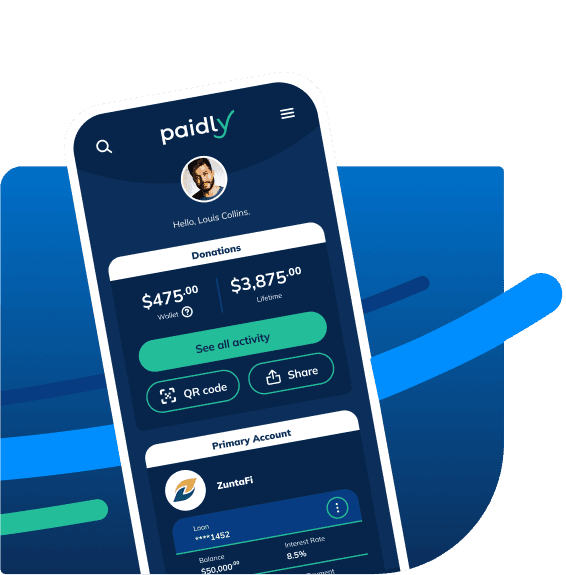
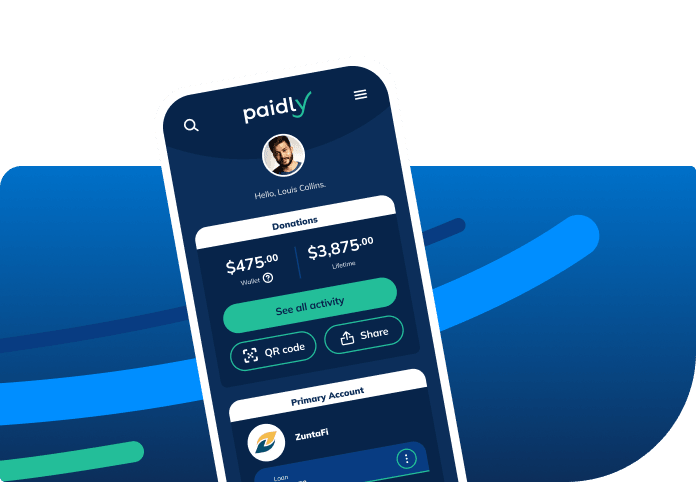
Gain financial awareness and take control of your debt, savings, and donations. Paidly is a convenient, connected way to get ahead with no pay-to-download or hidden fees.


To autopay or not to autopay
Choosing whether to enroll in autopay is a personal financial decision. It can save you time, money, and stress, but needs regular oversight and can result in payment errors. Weigh autopay’s benefits against its pitfalls and consider alternatives to build a student loan repayment strategy that works for you.
Team Paidly
Paidly is the go-to platform for rising above student debt. We specialize in innovative solutions, such as employer student loan assistance benefits, streamlined 529 plan contributions, and crowdfunding tools for individuals and their families. Backed by nearly two decades of experience in financial technology, Paidly is committed to simplifying student loan repayment, reducing loan dependency, and empowering students to take control of their finances no matter where they are in their educational journey.
Stay Ahead of the Curve
Get the latest insights on student loan repayment, 529 contributions, and maximizing employer benefits delivered to your inbox.
The information provided is of a general nature and an educational resource. It is not intended to provide advice or address the situation of any particular individual or entity. Any recipient shall be responsible for the use to which it puts this document. Paidly shall have no liability for the information provided. While care has been taken to produce this document, Paidly does not warrant, represent or guarantee the completeness, accuracy, adequacy, or fitness with respect to the information contained in this document. The information provided does not reflect new circumstances, or additional regulatory and legal changes. The issues addressed may have legal, financial, and health implications, and we recommend you speak to your legal, financial, and health advisors before acting on any of the information provided.
You may also like
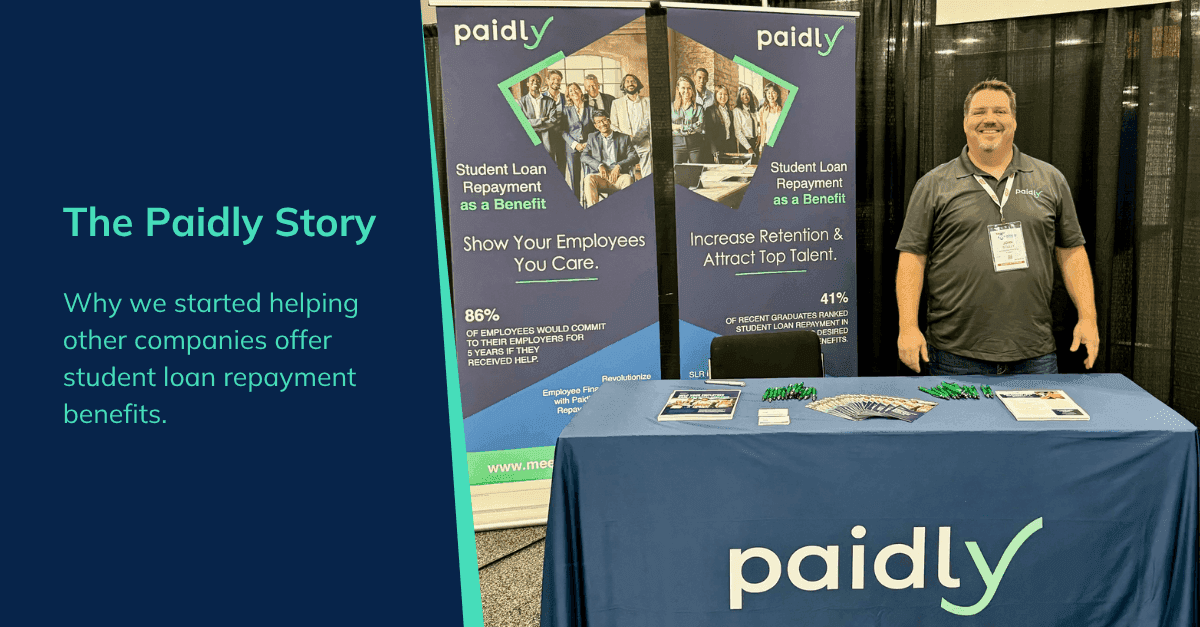
Why I Started Paidly
We set out to stop student debt from making life decisions for employees.


The HR Guide to Using Your Entire Education Budget
Your education budget can do a lot more than just pay for tuition. Learn how adding student loan repayment can expand your benefits without expanding your budget.
Education Benefits You Should Know About
Education benefits like 529 savings, tuition reimbursement, and student loan repayment can help you reduce education costs during every stage of your career.