
How to Prepare for Federal Student Loan Repayment
Making regular, on-time payments is key to tackling student loans. Here’s everything you need to know about preparing for repayment, including when it starts, where to pay, and how to ease into it.

Key Takeaways
- Student loan repayment for federal loans begins after graduation, dropping below a half-time schedule, or leaving the institution
- Borrowers should complete exit counseling on studentaid.gov and take note of their loan information, including the loan amount, repayment plan schedule, and mandatory payment start date
- Borrowers can ease into repayment through budgeting, setting up autopay, and using crowdfunding to make early and extra payments during their grace period
- Once borrowers understand their loan terms and repayment schedule, they should consider long-term ways to manage repayment like applying for loan forgiveness, refinancing with a private lender, and seeking employer student loan assistance
Graduation is a time of celebration, new beginnings, and (unfortunately) student loan repayment. In this article, we cover everything you need to know about repayment, including how to prepare for it and ways you can ease the burden.
Recent legislative changes impact Income-Driven Repayment (IDR) plans. For updated information regarding federal student loan repayment options, see StudentAid's IDR Plan Court Actions: Impact on Borrowers page.
What You Need to Know About Entering Federal Student Loan Repayment
Learning your federal loan information is the first step to preparing for repayment. It’s important that you know what type of loan you have, when repayment becomes mandatory, and how much you owe.
For each of your federal loans, make note of:
- the total loan amount
- your interest rate
- the loan type (Direct Subsidized, Direct PLUS, etc.)
- your loan servicer (who manages the loan)
- your current repayment plan (we’ll explain more about this soon)
Completing mandatory Student Loan Exit Counseling will guide you through collecting your loan information and help you understand your repayment terms.
When repayment starts
Student loan repayment begins after you graduate, have a less-than-half time schedule, or leave your institution. However, when you’re expected to start making mandatory payments varies by loan type.
Most federal loans have a 6 month grace period, so if you graduate in May, mandatory repayment won’t start until November. Some federal loans have longer grace periods (like Perkins loans) or no grace period (like Parent PLUS loans) so make sure you know what kind of loan you have and when repayment starts.
| Federal Loan | Grace Period |
|---|---|
| Direct Consolidation Loans, Parent PLUS | No grace period |
| Direct PLUS | No grace period, but automatically receives 6-month deferment |
| Direct Subsidized, Direct Unsubsidized, Federal Family Education Loan (FFEL) | 6-month grace period |
| Perkins | 9-month grace period |
Source: StudentAid.gov
You can also request to defer payments with your loan servicer, if needed.
How much to pay
Your monthly payments will depend on the loan amount and your repayment plan. Your loan servicer will provide you with a repayment schedule that states when the first payment is due, how frequently you need to make payments, and the amount of each payment.
For federal loans, you’ll automatically be put on a standard 10-year repayment plan unless you apply for an Income-Driven Repayment (IDR) plan. You can request a different repayment plan at any time.
Though a standard plan will result in higher monthly payments, you’ll pay them off faster (in 10 years) whereas IDR plans have lower payments with much longer payback periods (20-25 years).
If you have the average student debt of $38,375 with a 6% interest rate, paying off your loan in 10 years will save you $15,000 in interest and 10 years of payments compared to a 20-year IDR plan. However, the monthly payment on a 10-year standard plan will be much higher – which may not fit into your budget.
The right repayment plan for you will depend on your financial situation and the amount of monthly payment you can afford. You can compare federal repayment plans with StudentAid’s Loan Simulator tool.
Beginning July 1st, 2026, new borrowers will automatically be put onto one of two plans:
- The NEW standard plan will use the amount borrowed to determine monthly payments and the length of the repayment term.
- The Repayment Assistance Plan (RAP) will use income to determine monthly payments, with borrowers needing to make 360 on-time payments (30 years) before receiving loan forgiveness. Borrowers on RAP will pay 1-10% of their income in monthly payments depending on their income bracket, with a minimum monthly payment of $10.
Current borrowers on IDR plans have until July 1st, 2028, to change to one of these two options.
Where to send payments
Though you can see your loan information through your studentaid.gov portal, you’ll need to log into your loan servicer to make payments.
If you haven’t logged in to your loan servicer before, now is a great time to create an account and make sure they have the correct contact information for you – you don’t want to miss any communication regarding your loan!
Loan consolidation is an option. Depending on how many federal loans you have, you may want to consider loan consolidation, which combines multiple loans into one. This can make it easier to keep track of payments and monitor your debt. However, consolidating your loans may mean delaying forgiveness and forfeiting the repayment grace period. If consolidation feels like the right step for you, consider doing it toward the end of your grace period.
Three Ways to Ease Into Repayment
In addition to becoming familiar with your loan terms and choosing a repayment plan, your grace period is the perfect time to start easing into repayment. There are many ways you can make repayment easier and more manageable.
1. Create a budget
It’s important to assess your income and expenses when starting repayment. After all, you need to make sure you can afford to follow your repayment plan! There are many ways to create a budget – using a method like the 50-30-20 rule can be a good place to start.
2. Set up autopay
Staying on top of your payments keeps you out of delinquency (3 months without payment) and eventual default (9 months without payment). You want to avoid both of these as it can affect your credit and lead to wage garnishment. Setting up autopay ensures you never miss a monthly payment. However, make sure you understand the pitfalls to autopay before getting started.
3. Make early and extra payments
Making extra payments during your grace period (or while you’re still in school) will lower the amount of interest and help you pay down your loans faster. An easy way to do this is to use any monetary gifts from birthdays, holidays, or graduations to pay off debt. Better yet, give loved ones a way to send celebratory gifts directly toward your loans.

All yours in just a few taps
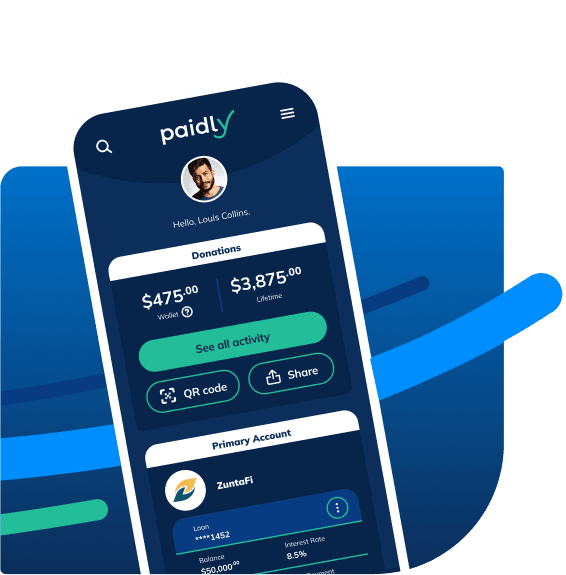
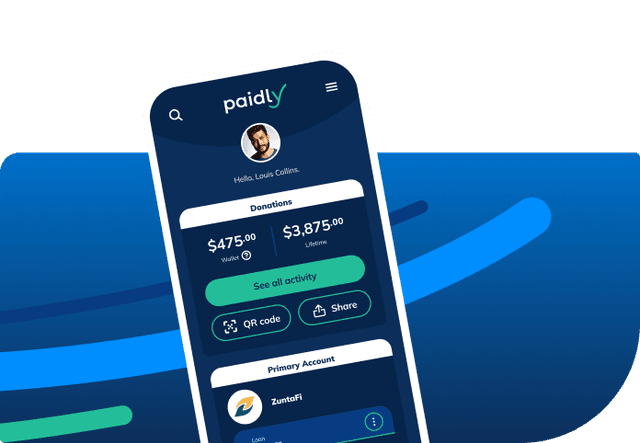
Gain financial awareness and take control of your debt, savings, and donations. Paidly is a convenient, connected way to get ahead with no pay-to-download or hidden fees.


Three Long-Term Repayment Solutions
Repaying student loans is something you’ll be doing for a long time, typically 10 to 30 years. Starting out strong is important, but there are ways you can ease the burden long-term.
1. Apply for loan forgiveness
See if you qualify for loan forgiveness. Forgiveness programs are usually for specific borrowers and require a certain number of payments for part or all of the remaining balance to be forgiven. Two popular forgiveness programs are Public Service Loan Forgiveness (PSLF) and Teacher Loan Forgiveness (TLF)).
2. Refinance with a private lender
Consider loan refinancing with a private lender like Earnest. Refinancing may lead to more favorable terms for you, like lower interest rates with longer payback periods. However, you will lose out on federal loan options like forgiveness and IDR plans, so make sure to weigh the pros and cons before taking any major steps.
3. Seek employer assistance
Seek jobs with employer student loan repayment benefits to get help paying down federal or private loans. Seeking a job with this benefit or choosing to ask your employer for it can make a big difference in how quickly you pay off your loans. Plus, it has advantages for you both! Learn more about the benefits of employer student loan assistance before approaching your employer about it.

Take Repayment Into Your Hands
Beginning federal student loan repayment can be scary, but learning to manage your payments doesn’t have to be. Follow the advice in this article and you’ll be on your way to mastering your student loans and getting them paid off for good.
Team Paidly
Paidly is the go-to platform for rising above student debt. We specialize in innovative solutions, such as employer student loan assistance benefits, streamlined 529 plan contributions, and crowdfunding tools for individuals and their families. Backed by nearly two decades of experience in financial technology, Paidly is committed to simplifying student loan repayment, reducing loan dependency, and empowering students to take control of their finances no matter where they are in their educational journey.
Stay Ahead of the Curve
Get the latest insights on student loan repayment, 529 contributions, and maximizing employer benefits delivered to your inbox.
The information provided is of a general nature and an educational resource. It is not intended to provide advice or address the situation of any particular individual or entity. Any recipient shall be responsible for the use to which it puts this document. Paidly shall have no liability for the information provided. While care has been taken to produce this document, Paidly does not warrant, represent or guarantee the completeness, accuracy, adequacy, or fitness with respect to the information contained in this document. The information provided does not reflect new circumstances, or additional regulatory and legal changes. The issues addressed may have legal, financial, and health implications, and we recommend you speak to your legal, financial, and health advisors before acting on any of the information provided.
You may also like

Preparing for the Talent Storm: Student Loan Benefits for Recruitment & Retention
As skilled worker shortages loom, student loan repayment benefits give employers a practical way to attract early-career talent and retain valuable employees.
Why I Started Paidly
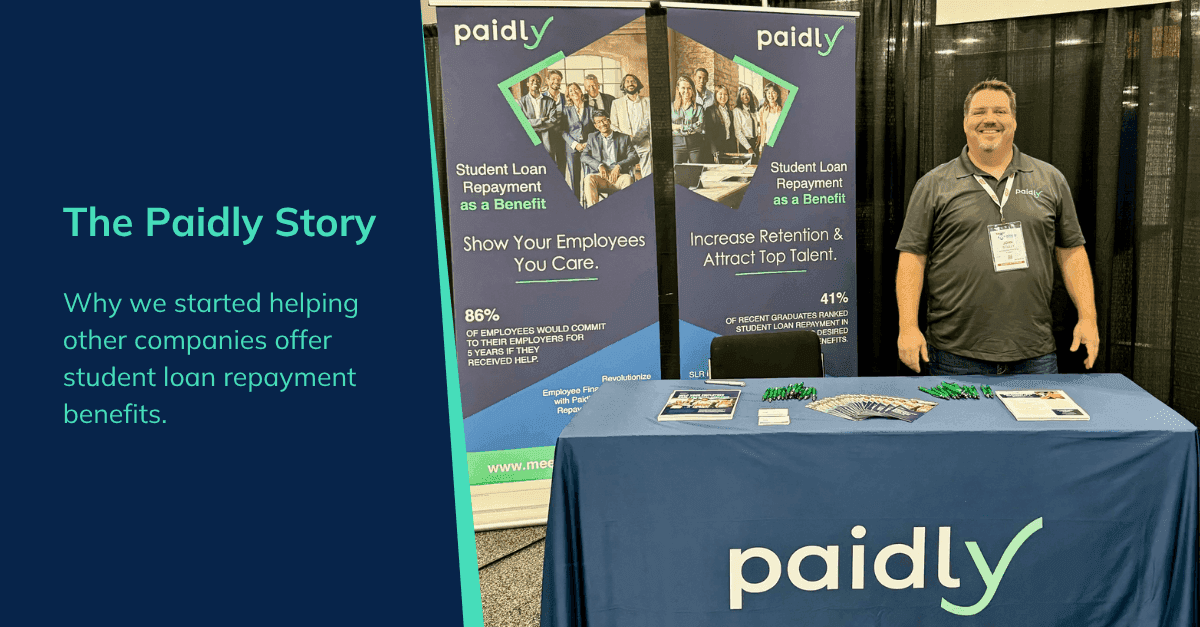
We set out to stop student debt from making life decisions for employees.


The HR Guide to Using Your Entire Education Budget
Your education budget can do a lot more than just pay for tuition. Learn how adding student loan repayment can expand your benefits without expanding your budget.