Employer Student Loan Repayment: The Ultimate Guide
Curious about Student Loan Repayment Benefits but not sure where to start? In this post, we share key resources and go over the basics so you can get your benefit up and running in no time.


Key Takeaways
- An Employer Student Loan Repayment Benefit allows employers to make payments toward an employee’s student loan debt.
- The benefit can be set up for monthly payments or on-demand payments.
- Offering student loan assistance increases retention, enhances recruitment, supports employee wellbeing, and has tax advantages.
- Paidly’s experts are here to help you create a Student Loan Repayment Benefit and help you manage it every step of the way
Employer Student Loan Repayment Benefit Overview
A Student Loan Repayment Benefit allows employers to make payments toward an employee’s student loan debt. Think of it like a 401(k) or 529 contribution, but rather than building employee savings for the future, you’re paying down debt so they can live more comfortably now.
Helping employees with their student loans lessens their financial stress at home so they can be happier and more present at work.
- Employer Student Loan Repayment Benefit
- The Definitive Guide to Employer Student Loan Repayment Benefits
Employee student loan assistance services
Easily offer student loan repayment benefits. Download our free guide or visit our employer benefit page to learn how to relieve employee financial stress.
Download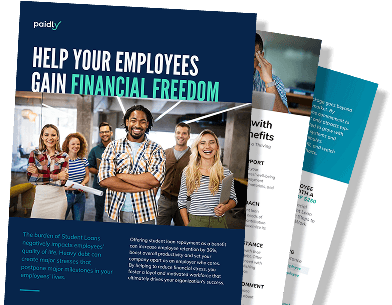
Payments can be monthly or on-demand
Student Loan Repayment Benefits don’t have to be a monthly contribution. Paying out bonuses or making one-time contributions is a great way to test out the benefit or support your staff on a budget.
See what impact a
Student Loan Repayment Benefit could have on your employees.
- Student Loan Benefit Payoff Calculator
- Lump Sum Student Loan Extra Payment Calculator
- On-demand Supplemental Student Loan Repayment
- Why You'll Want to Put Year-End Bonuses Toward Student Loans
- Redirect Bonuses and Unused PTO to Pay Off Student Loans
- How To Give Your Employees a Bonus This Year Using PTO Buyback
Understanding the Student Debt Crisis
As of mid-2025, student loan debt in the United States totals $1.8 trillion. The average graduate owes tens of thousands of dollars and it takes most of them decades to pay it off, causing 71% of borrowers to delay milestones like homeownership, parenthood, and continuing education.
The following articles explore why higher education is so expensive and how it’s affecting borrowers long-term.
- The Hidden Costs of College: Why Tuition Keeps Rising
- Debt vs. Service: The Dilemma of America's Essential Workers
- Debt vs. Service: The Personal Cost of Teaching (for more on delaying homeownership)
- Debt vs. Service: The Healthcare Worker Tradeoff (for more on delaying further education)
- Debt vs. Service: The Struggle in Nonprofits (for more on delaying parenthood)
Why Employers should offer a Student Loan Repayment Benefit
There are many reasons employers should consider offering a Student Loan Repayment Benefit, including enhanced recruitment, increased retention, supporting employee wellbeing, improved DEI, and tax advantages. See the subtopics below to dive deeper into each of these reasons.
- 6 Reasons Employer Student Loan Repayment Will Remain a Game-Changer
- Top 5 Reasons Why Employers Should Offer Employee Student Loan Repayment
- 5 Emerging Trends Shaping the Future of Employee Student Loan Assistance
Recruitment & Retention
86% of employees say they’d commit to a company for at least five years if the employer helped pay down their student loans. That’s a huge deal since employees who feel their student debt is a heavy burden are twice as likely to leave their jobs for other opportunities.
On top of that, 77% of employees report they would be more likely to accept a job offer from an employer willing to help pay down their student loans, making student loan assistance a standout employer benefit for both your current and incoming workforce. Here are some resources on how adding this benefit could help you attract the best talent and help you keep them.
Create an informed employee retention strategy
See what your return on investment could look like when offering a Student Loan Repayment Benefit
See your return
- Employer Student Loan Repayment ROI Calculator
- Applicants Expect Student Debt Relief from Employers
- Top 10 Companies Offering Student Loan Repayment Assistance Programs
Employee Wellbeing
Financial stress from student loan debt negatively impacts employee productivity, engagement, mental health, and interpersonal relationships. Student debt also disproportionately burdens women, people of color, immigrants, and first-generation college students.
Visit the articles below to see how a Student Loan Repayment Benefit will positively impact your employees.
- Unleash Financial Freedom: The Benefits of Workplace Student Loan Assistance
- Tuition Reimbursement vs Student Loan Repayment Benefit: Which One is Right for You?
- Transforming Your Education Financing Benefits Beyond Tuition Reimbursement
- Advancing Diversity and Inclusion: How Student Loan Repayment Benefits Make a Difference
Tax Benefits
Employers can contribute up to $5,250 in student loan payments tax-free through the CARES Act. See the articles below to learn more about how you can take advantage of this benefit.
- Unraveling the CARES Act: Shaping the Future of Student Loan Repayment
- The Secure 2.0 Act: A New Era for Student Loan Repayment
- Understanding Section 127 Plans: Your Guide to Making Smart Tax Choices
Want to create a Section 127 plan? Paidly's experts can guide you through the process and help you implement a compliant, effective educational assistance program. Talk to an Expert today to learn more.
How to ask for an Employer Student Loan Repayment Benefit
Are you an employee looking for student loan assistance? Here’s how you can make the case for a Student Loan Repayment Benefit to your employer.
Getting a Student Loan Repayment Benefit started
The first steps to starting a Student Loan Repayment Benefit are to create a budget and identify eligible employees. Paidly can guide you through the rest, including setting up the benefit and distributing payments on your schedule.
Ready to get started?

Are you a broker? Learn how to Offer Student Loan Repayment Benefits Through Your Brokerage.
Want to know more about how Paidly can support your workforce? Schedule a demo or send us an email at [email protected].

Samantha Park
Samantha Park is a writer with a background in public service work. She earned a M.S. in Professional Writing from Towson University where she focused on writing for the private and public sectors, and has previously graduated with an A.A. in Psychology from Anne Arundel Community College and a B.A. in Sociology from the University of Maryland College Park. Samantha has worked within and alongside the public sector for over a decade and cares deeply about empowering marginalized youth, expanding access to opportunity through education, and increasing community involvement.
Stay Ahead of the Curve
Get the latest insights on student loan repayment, 529 contributions, and maximizing employer benefits delivered to your inbox.
The information provided is of a general nature and an educational resource. It is not intended to provide advice or address the situation of any particular individual or entity. Any recipient shall be responsible for the use to which it puts this document. Paidly shall have no liability for the information provided. While care has been taken to produce this document, Paidly does not warrant, represent or guarantee the completeness, accuracy, adequacy, or fitness with respect to the information contained in this document. The information provided does not reflect new circumstances, or additional regulatory and legal changes. The issues addressed may have legal, financial, and health implications, and we recommend you speak to your legal, financial, and health advisors before acting on any of the information provided.
You may also like
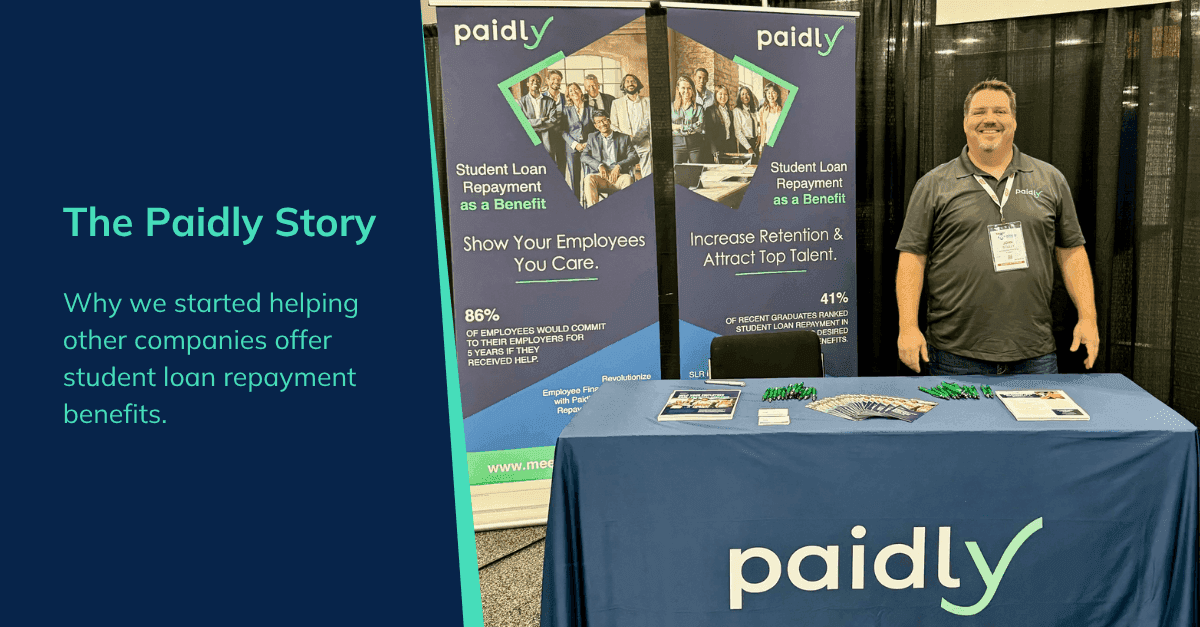
Why I Started Paidly
We set out to stop student debt from making life decisions for employees.


The HR Guide to Using Your Entire Education Budget
Your education budget can do a lot more than just pay for tuition. Learn how adding student loan repayment can expand your benefits without expanding your budget.

Education Benefits You Should Know About
Education benefits like 529 savings, tuition reimbursement, and student loan repayment can help you reduce education costs during every stage of your career.