
6 Steps Borrowers Can Take to Protect Themselves Amidst Uncertainty
Worried about recent federal student loan changes? Here are 6 proactive steps you can take to protect yourself and prepare for whatever comes next.


Key Takeaways
- If you have a federal student loan, you should take steps now to protect your financial wellbeing
- Stay informed by updating your contact information with lenders and keeping records of your payments and loan details
- Prepare for higher monthly payments by budgeting, seeking community support, and asking for student loan assistance from your employer
- Consider refinancing with a private lender for lower interest rates, lower monthly payments, and more stability
Recent changes to federal loan programs and student loan management may feel overwhelming, but there are simple ways to safeguard your financial wellbeing and get ready for what's next.
Many experts agree: don’t make drastic changes until there’s more clarity on what policy and programmatic shifts mean for you. Instead, you should stay informed, continue to make regular payments, and start taking steps to protect yourself and your student loans.
6 Steps to Protect and Prepare Yourself as a Student Borrower
1. Update your contact information to stay informed
One of the first things you can do is make sure StudentAid.gov and your loan servicers have accurate contact information for you. Outdated contact info can mean missing important communication regarding updates or changes to your loan repayment plan.
Log into each of your accounts and verify or update your address, email, and phone number to make sure communication about your student loans reaches you. And while you’re at it, update your passwords to keep your account secure.
2. Document your payments and loan details
Keeping records of your loan payments and loan details is good practice at any time, but it’s especially important when federal student loan management is undergoing extensive changes. You’ll want to document your loan amount, loan status, interest rates, payment terms, and repayment history by taking screenshots of your StudentAid dashboard and downloading your raw data file from StudentAid.gov. Having a comprehensive archive showing proof of payment and your loan details can help you resolve disputes quickly if information is lost or there are discrepancies in federal records.
3. Budget for higher monthly payments
With the future of repayment plans uncertain, you should prepare for the possibility of higher monthly payments. Some borrowers are already seeing increases and some projections suggest that borrowers could see an average increase of $200 per month. The best thing you can do is start budgeting. Identify areas where you can trim expenses and start setting aside funds to cover potential increases. Consider using the 50-30-20 rule or other budgeting guidelines to help you stay on track.
4. Seek support from your community
There’s no better time to lean on your community than during seasons of unease. Though we acknowledge the shame sometimes associated with student loan debt, know that there is nothing wrong with seeking support.
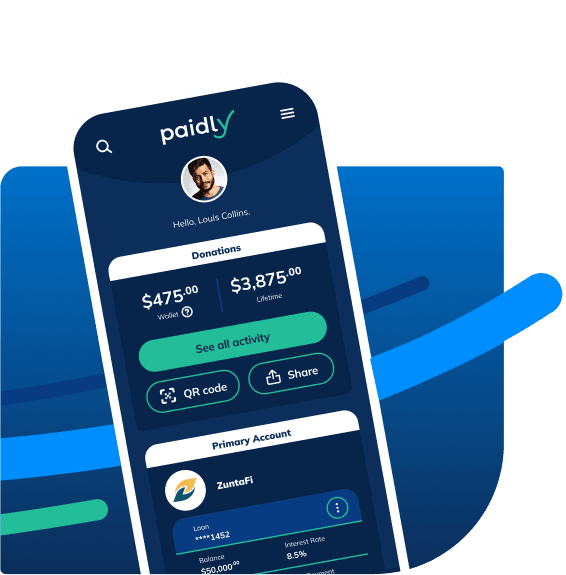
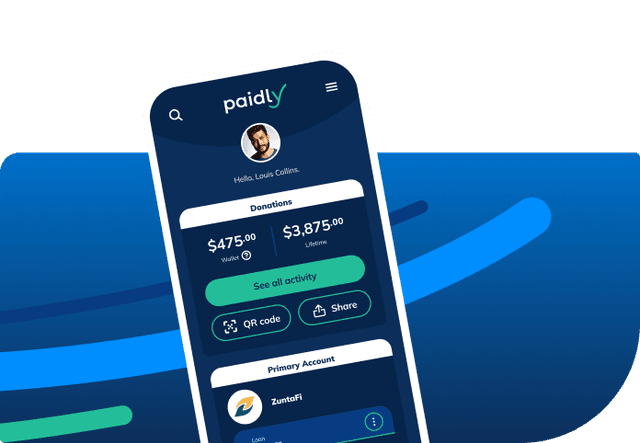
Loved ones and other members of your community can help contribute toward your student loans with Paidly. Use our app to let loved ones contribute directly toward your loans – no need to transfer funds or share loan details.

All yours in just a few taps
Gain financial awareness and take control of your debt, savings, and donations. Paidly is a convenient, connected way to get ahead with no pay-to-download or hidden fees.


5. Ask for student loan assistance from your employer
Your employer can also help pay down your loans through an Employer Student Loan Repayment benefit. Like a 401k or 529 plan contribution, employers can make payments directly toward your loans through Paidly, taking some of the pressure off your shoulders.
Not sure if your employer offers a student loan repayment benefit? Contact your HR department and ask if student loan assistance is available or something they’re planning to implement. If they don’t offer assistance yet, make a case for the benefit using our step-by-step guide.
6. Consider refinancing for lower interest rates
In addition to budgeting and receiving support, it’s a good time to see if you can refinance for more favorable loan terms. Refinancing with a private lender can lead to lower interest rates and lower monthly payments while providing more stability and customer support than federal loans.
It’s important to thoroughly research your options and compare the benefits of refinancing. Many trusted lenders like Earnest offer competitive rates to help student borrowers refinance their federal loans into private ones. Try a refinancing calculator to see if moving to a private lender makes sense for you.
Proactive steps help you maintain control amidst uncertainty
The future of federal student loans may be unclear, but you can maintain control of your financial situation by taking proactive steps. From staying informed and keeping good records to seeking outside support and refinancing, every step you take now better prepares you for whatever lies ahead.
Team Paidly
Paidly is the go-to platform for rising above student debt. We specialize in innovative solutions, such as employer student loan assistance benefits, streamlined 529 plan contributions, and crowdfunding tools for individuals and their families. Backed by nearly two decades of experience in financial technology, Paidly is committed to simplifying student loan repayment, reducing loan dependency, and empowering students to take control of their finances no matter where they are in their educational journey.
Stay Ahead of the Curve
Get the latest insights on student loan repayment, 529 contributions, and maximizing employer benefits delivered to your inbox.
The information provided is of a general nature and an educational resource. It is not intended to provide advice or address the situation of any particular individual or entity. Any recipient shall be responsible for the use to which it puts this document. Paidly shall have no liability for the information provided. While care has been taken to produce this document, Paidly does not warrant, represent or guarantee the completeness, accuracy, adequacy, or fitness with respect to the information contained in this document. The information provided does not reflect new circumstances, or additional regulatory and legal changes. The issues addressed may have legal, financial, and health implications, and we recommend you speak to your legal, financial, and health advisors before acting on any of the information provided.
You may also like

Preparing for the Talent Storm: Student Loan Benefits for Recruitment & Retention
As skilled worker shortages loom, student loan repayment benefits give employers a practical way to attract early-career talent and retain valuable employees.
Why I Started Paidly
We set out to stop student debt from making life decisions for employees.


The HR Guide to Using Your Entire Education Budget
Your education budget can do a lot more than just pay for tuition. Learn how adding student loan repayment can expand your benefits without expanding your budget.