The Importance of College Savings: An Open Letter to My Kids About 529s
What I want my kids to know about their 529 savings plans.


Key Takeaways
- 529 plans are powerful education savings accounts that grow tax-free and stay tax-free when used on qualified expenses. Starting early can make a major difference over time.
- 529 plans can be used for much more than college tuition. Funds can help cover trade schools, apprenticeships, continuing education, career credentialing, K-12 expenses, and even student loan repayment.
- Unused 529 funds can be rolled into a Roth IRA, helping jumpstart retirement savings. Families can also pass funds onto other family members, helping build generational wealth.
- At Paidly, we see firsthand how student debt impacts long-term financial wellness. Proactive savings tools like 529s combined with crowdfunding and employer support can help families reduce future borrowing.
To my kids,
I've been quietly building something on your behalf since before you could walk. It’s called a 529 savings plan, and it’s one thing I believe will genuinely change your lives for the better.
At Paidly, I spend every day helping people navigate the financial realities of education, debt, and long-term savings. Being able to pay outright for college instead of borrowing for it is a huge deal. I’ve seen what happens when people graduate carrying serious debt: they delay buying homes, pass on dream careers for higher paying ones, and spend their 20s digging out of debt instead of building for the future. That's a big part of why I opened your 529s – I didn't want that for you.
Opening these accounts was one of the most important financial decisions I made as your dad. A 529 savings plan lets your future be chosen by you, not dictated by debt.
But what is a 529? Let me tell you a bit more about them.
529s Are an Investment in Your Future
A 529 is a savings account built specifically for education expenses. You put money in and it grows completely tax-free (which might not be exciting to you right now but it’s very exciting to me). That means when you want to take the money out for college, you’ll owe nothing in federal taxes.
Let’s say I put $5,000 into a 529 the year you were born and it grows around 7% each year. By the time you're 18, you’ll have roughly $17,000 in savings (that’s $12,000 for just sitting there!). A regular investment account would send some of that money to the IRS, but a 529 doesn't. And it grows bigger the longer the money is in there, which is exactly why starting to save early matters so much (which is good advice for all savings, by the way).
Another great thing about it is that many states offer a tax deduction for contributions — meaning grandma and grandpa can help you build it up without losing any money to taxes.
One of the things I realized while building Paidly is that people want to help their loved ones build a better future, they just need an easy way to do it. That’s why we crowdfund your 529: to give your family and friends the ability to invest in your future during birthdays, holidays, and other milestones.
They Can Be Used on Much More Than College
Maybe you’re thinking you don’t want to go to college, and that’s okay, too. College might not feel like the right path for everyone, and if you decide it’s not the right path for you, there are still ways a 529 plan can help your career.
The current rules for 529s let you use them on apprenticeships and trades, as well as continuing education and training courses. That probably doesn’t sound exciting right now, but some of the things you’ll need to do to maintain your job can be pretty expensive (and not all employers cover those costs for you). That’s why it’s important to have your own savings.
Here's the current list of what 529s can cover:
- K–12 private school tuition
- College tuition, fees, housing, and meal plans
- Curriculum materials like textbooks, workbooks, and digital tools
- Apprenticeships and vocational training
- Graduate and professional school
- Student loan repayment
- Career credentialing and professional licensing
Whether you go to a four-year university, pursue a trade, get licensed in something, or take a nontraditional path entirely, there's almost certainly a way your 529 can help pay for it.
Roll It Into Retirement or Build Generational Wealth
So I know retirement is a long way away for you, but I’m gonna tell you this next part anyway.
If there's money left over in your 529 after your education is done, you can put up to $35,000 toward retirement tax-free. $35,000 sitting in a Roth IRA at 22 grows to roughly $520,000 by the time you’ll retire. Your college fund becoming a foundation for your retirement is a pretty remarkable thing (one day, you’ll probably think so, too).
And if you don’t end up using all of it or wanting it for retirement? Say you earn a scholarship, or choose a path that doesn’t cost a lot for education, or somehow strike it rich, we can transfer the savings to another family member or even save it for your kids someday.
It’s a Gift From Me to You
I started 529 accounts so your 20s can belong to you: to take risks, chase things that excite you, and build on solid ground instead of digging out from debt. And I started Paidly to make that same tool easier to use for other people as they create more financial stability for the future.
529s are more flexible and more powerful than they've ever been. So take advantage of all a 529 can help you with, ask me anything about it, and open one for your own kids someday way earlier than feels necessary, just like I did for you.
Love you both, Dad

John Scully, CEO
John Scully is a seasoned executive leader with a strong background in business operations and technology. As Co-Founder of Paidly Student Loan Benefits, he empowers employers to enhance talent recruitment and retention through a cloud-based platform that allows tax-free student loan payments. With experience in industries like healthcare and fintech, John has held leadership positions at companies such as Sharp Notions and the University of Rochester Medical Center. Holding an MBA from the University of Rochester and a B.S. from Excelsior College, John is dedicated to helping organizations and individuals navigate the complexities of Fintech, especially student loan payments.
Stay Ahead of the Curve
Get the latest insights on student loan repayment, 529 contributions, and maximizing employer benefits delivered to your inbox.
The information provided is of a general nature and an educational resource. It is not intended to provide advice or address the situation of any particular individual or entity. Any recipient shall be responsible for the use to which it puts this document. Paidly shall have no liability for the information provided. While care has been taken to produce this document, Paidly does not warrant, represent or guarantee the completeness, accuracy, adequacy, or fitness with respect to the information contained in this document. The information provided does not reflect new circumstances, or additional regulatory and legal changes. The issues addressed may have legal, financial, and health implications, and we recommend you speak to your legal, financial, and health advisors before acting on any of the information provided.
You may also like
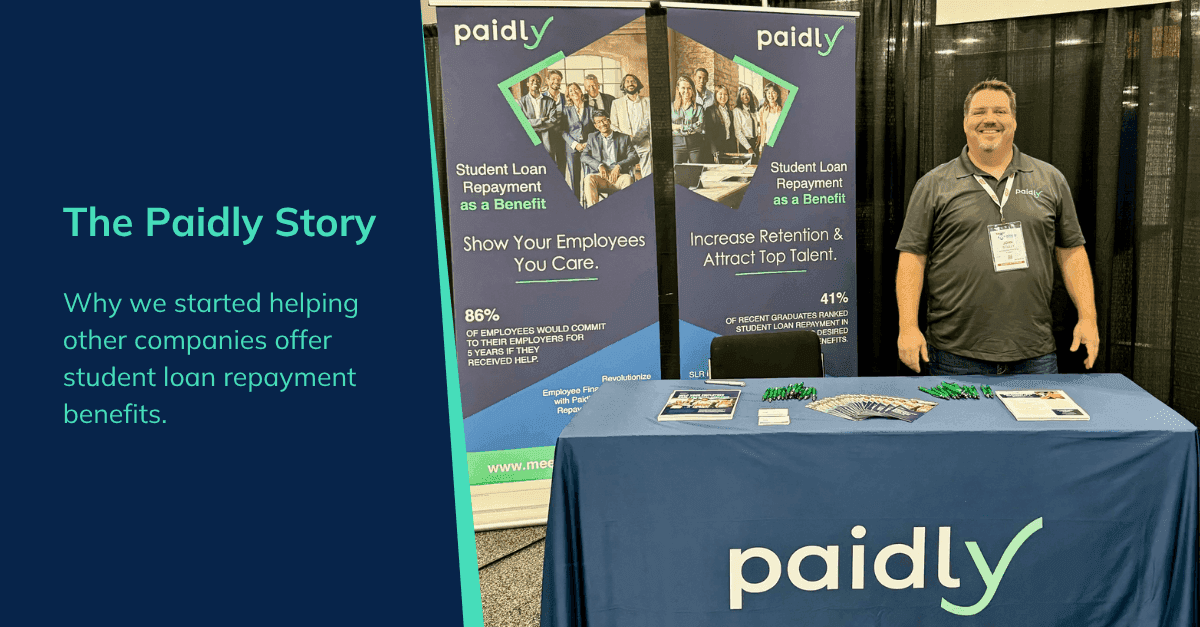
Why I Started Paidly
We set out to stop student debt from making life decisions for employees.


The HR Guide to Using Your Entire Education Budget
Your education budget can do a lot more than just pay for tuition. Learn how adding student loan repayment can expand your benefits without expanding your budget.
Education Benefits You Should Know About
Education benefits like 529 savings, tuition reimbursement, and student loan repayment can help you reduce education costs during every stage of your career.