
Public Service Loan Forgiveness: Debunking Common Misconceptions
There are a lot of misconceptions about Public Service Loan Forgiveness. We’ve debunked 9 PSLF myths so you can decide if pursuing forgiveness is right for you.

Key Takeaways
- Public Service Loan Forgiveness (PSLF) is a program that forgives the outstanding student debt of eligible workers.
- There are many misconceptions out there about PSLF. Borrowers must meet certain criteria to qualify for forgiveness.
- It’s important to have a backup plan while working toward PSLF. Consider asking for employer assistance or crowdfunding your student loans.
Public Service Loan Forgiveness (PSLF) is a life-changing program fraught with misconceptions. Let’s debunk common myths about PSLF so you can choose whether to pursue forgiveness with confidence.
What is Public Service Loan Forgiveness?
Public Service Loan Forgiveness (PSLF) is a program that forgives and removes the remaining federal student debt for public service workers who meet certain criteria:
- Work full-time for a qualified employer
- Have outstanding student debt in an eligible loan
- Are on an eligible repayment plan
Borrowers who meet this criteria can apply to have their loans forgiven after 120 qualified payments have been made. Those pursuing forgiveness should use the PSLF Help Tool to submit applications and track payments.
PSLF has been in the news a lot lately, and its future is uncertain. Make sure to stay up-to-date so you don’t miss any changes that affect you.
9 PSLF Myths Debunked
Myth 1: My loans will automatically be forgiven after 10 years of public service
Your loans will not automatically be forgiven for working in public service. You need to make 120 qualified payments and apply to be eligible for PSLF. Applying requires filling out an Employment Certification Form that proves you worked for an eligible employer at the time you made each payment to your loans.
Myth 2: All loans are eligible for forgiveness under PSLF
PSLF only forgives federal Direct student loan debt that meets certain requirements. Private loans are not eligible for forgiveness under PSLF.
Eligible Loans
- Direct Subsidized Loans
- Direct Unsubsidized Loans
- Direct PLUS Loans
- Direct Consolidation Loans
Ineligible Loans
- Federal Family Education Loans (FFEL)
- Federal Perkins Loans
- Private Loans
Note that Parent PLUS loans will be ineligible for PSLF starting July 2026 due to the One Big Beautiful Bill Act.
Your loans must also be on an income-driven repayment (IDR) plan or 10-year Standard Repayment Plan to be eligible for forgiveness.
Eligible Plans
- 10-year Standard Repayment Plan
- Income-Based Repayment (IBR) Plan
- Income-Contingent Repayment (ICR) Plan
- Pay As You Earn (PAYE) Plan
- Saving on A Valuable Education (SAVE) Plan
Ineligible Plans
- Standard Repayment Plan for Direct Consolidation Loans
- Graduated Repayment Plan
- Extended Repayment Plan
Note that the only IDR plan available to new borrowers will be the Repayment Assistance Plan (RAP) starting July 2026 due to the One Big Beautiful Bill Act. Borrowers currently on one of the existing IDR plans will need to move to RAP by July 2028 to maintain PSLF eligibility.
You can gain eligibility for PSLF by combining your federal loans into a Direct Consolidation Loan and getting on an IDR plan.
Myth 3: I can only have one loan forgiven at a time
PSLF forgives all remaining federal student debt a borrower has, even if that debt is spread over multiple loans. However, every loan payment must be certified, so having multiple loans can make the process tedious.
Combining your federal loans into a Direct Consolidation Loan can make keeping track of repayment and certification easier.
Note that consolidating your loans will take a weighted average of the qualified payments. For example, if you’ve made 60 qualified payments to one loan and 20 qualified payments to the other, consolidating will place your total qualified payment count at 40.
Myth 4: Any public service job is eligible for PSLF
PSLF is only for employees of qualified employers who work full-time (at least 30 hours per week). Most of these employers are 501c3 nonprofit organizations or governmental agencies.
Eligible Employers
- US-based government organizations
- Not-for-profit organizations with 501c3 designation
- Not-for-profit organizations that devote a majority of full-time equivalent employees to providing public service
Ineligible Employers
- For-profit organizations
- Labor unions
- Partisan political organizations
Volunteering with AmeriCorps and Peace Corps counts as qualified employment.
Teachers and adjunct faculty also qualify, even if working on semester or quarter basis. Teachers must work full-time for 8 months out of the year and adjunct faculty should multiply each credit or contact hour by 3.35 to see if they qualify as full-time (at least 30 hours per week).
Note that contractors are technically employed by their contracting company, not the company they work with. If you’re unsure who your employer is, check your W-2.
Myth 5: I’m eligible for PSLF whether or not my employer is qualified
PSLF is based on your employer. You must work for a qualified employer to be eligible for forgiveness. The good news: if you work for a qualified employer, you can receive PSLF even if your specific role is not public service-related.
If your employer is not listed or has previously been deemed ineligible, you can provide documentation to request an eligibility review through the PSLF Help Tool.
A recent executive order may affect your ability to receive PSLF. The Restoring Public Service Loan Forgiveness order excludes organizations that engage in the following activities from being eligible for forgiveness:
- Aiding or abetting violations of immigration laws
- Supporting terrorism or obstructing federal government policy
- Child abuse, including transgender care
- Aiding or abetting discrimination
- Engaging in violation of State tort laws
Even one section of an organization being deemed ineligible makes the entire organization ineligible. Double-check your employer’s eligibility to ensure you’re still able to work toward PSLF.
Myth 6: Changing employers resets the clock
PSLF is based on the payments made (and certified) while working for a qualified employer. These payments do not need to be made under the same employer.
However, you will need to make sure your new employer is eligible. If they are not, your payments will not count toward PSLF.
Myth 7: The 120 payments must be consecutive and made on time
Payments do not need to be consecutive to be eligible for forgiveness, but only payments made while working for a qualified employer count. Having a break in employment will not set you back.
Late payments, paying ahead, and partial payments are all acceptable – as long as the total amount owed that month is paid, you’ll receive credit for a monthly payment.
Myth 8: Default, deferment, and forbearance disqualify me from PSLF
Falling into default, deferring repayment, or going into forbearance do not disqualify you from PSLF or restart your repayment count.
However, the time spent in default, deferment, and forbearance generally does not count toward PSLF (there are limited accepted types of deferment and forbearance that do count). This prolongs the time before your loans can be forgiven.
The payment pause during COVID-19 counts toward PSLF. If you believe you should receive credit for certain payments and haven’t yet, you can request reconsideration to increase your payment count or request a buyback if you’ve already received forgiveness.
Myth 9: Changing repayment plans puts me back at square one
Changing repayment plans does not mean starting over. As long as you are moving from one eligible plan to another, you maintain your PSLF eligibility and your total payment count.
Note that only payments made on IDR plans and the 10-year Standard Repayment Plan count toward PSLF.
Don’t wait for forgiveness to deal with your loans
Though forgiveness is great, getting there can be an uphill battle. Only 2.3% of applications for Public Service Loan Forgiveness have been accepted since November 2020, and 14.4% of pending applications have yet to be processed.
Recent cuts to the Department of Education mean wait times for PSLF approval are only growing longer. Plus, incoming changes to federal loans raise questions about the future of borrower forgiveness and Public Service Loan Forgiveness overall.
With the uncertainty surrounding PSLF, it’s important to have a backup plan. Depending on your circumstances, forgiveness may still be worth working toward, but it shouldn’t be your only option to deal with your loans.
Paidly streamlines the help you deserve
Chipping away at your loans now could lower your monthly payments while on the journey to forgiveness. Consider asking for employer student loan assistance or crowdfunding your student loans to make progress on them without breaking the bank.
Paidly lets your workplace and your community contribute to paying down your loans at no cost to you. Learn more at meetpaidly.com.
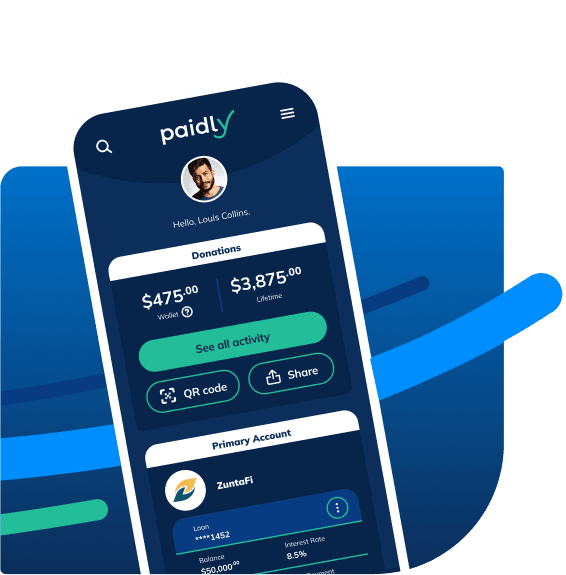
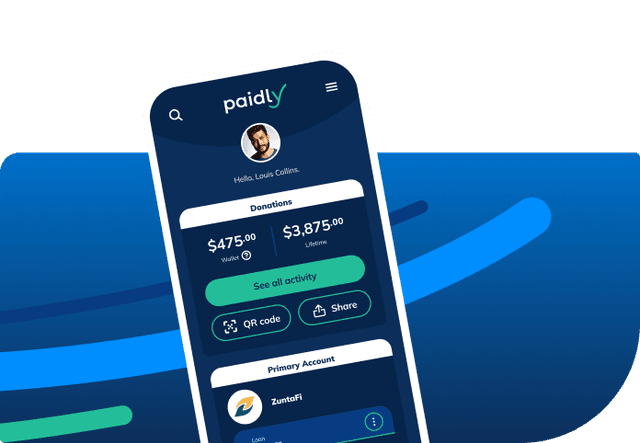

All yours in just a few taps
Gain financial awareness and take control of your debt, savings, and donations. Paidly is a convenient, connected way to get ahead with no pay-to-download or hidden fees.


Do your research!
With the program changing quickly and often, there are a lot of misconceptions about Public Service Loan Forgiveness. It’s important to do your own research and stay up-to-date on changes in order to understand what they mean for you.
PSLF can be challenging and tedious, but it can also be life-changing. Learn what you can to work toward forgiveness with confidence, and don’t forget to build a backup plan so you’re headed in the right direction no matter what the future holds.
For more information, see our Insider's Guide to PSLF.
Team Paidly
Paidly is the go-to platform for rising above student debt. We specialize in innovative solutions, such as employer student loan assistance benefits, streamlined 529 plan contributions, and crowdfunding tools for individuals and their families. Backed by nearly two decades of experience in financial technology, Paidly is committed to simplifying student loan repayment, reducing loan dependency, and empowering students to take control of their finances no matter where they are in their educational journey.
Stay Ahead of the Curve
Get the latest insights on student loan repayment, 529 contributions, and maximizing employer benefits delivered to your inbox.
The information provided is of a general nature and an educational resource. It is not intended to provide advice or address the situation of any particular individual or entity. Any recipient shall be responsible for the use to which it puts this document. Paidly shall have no liability for the information provided. While care has been taken to produce this document, Paidly does not warrant, represent or guarantee the completeness, accuracy, adequacy, or fitness with respect to the information contained in this document. The information provided does not reflect new circumstances, or additional regulatory and legal changes. The issues addressed may have legal, financial, and health implications, and we recommend you speak to your legal, financial, and health advisors before acting on any of the information provided.
You may also like

Preparing for the Talent Storm: Student Loan Benefits for Recruitment & Retention
As skilled worker shortages loom, student loan repayment benefits give employers a practical way to attract early-career talent and retain valuable employees.
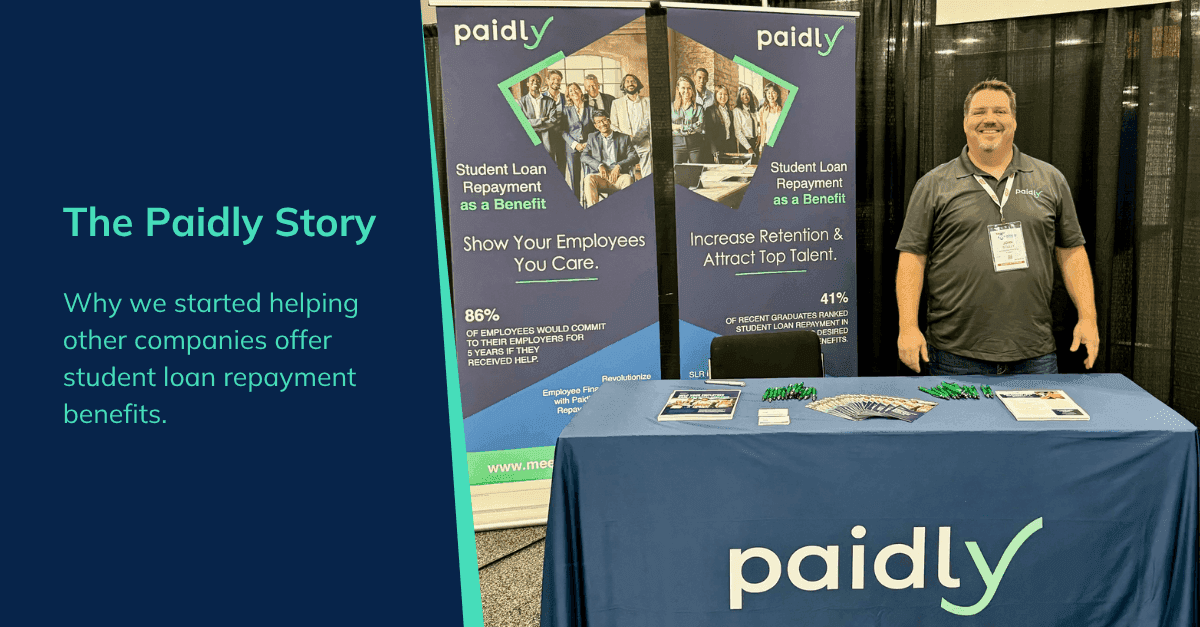
Why I Started Paidly
We set out to stop student debt from making life decisions for employees.


The HR Guide to Using Your Entire Education Budget
Your education budget can do a lot more than just pay for tuition. Learn how adding student loan repayment can expand your benefits without expanding your budget.