Curing the Pharmacist Student Debt Endemic with Employer Benefits
High student debt, stressful work environments, and emotional burnout leave pharmacists struggling. Employer student loan repayment benefits can make the difference.


Key Takeaways
- High student debt is a real problem for pharmacists. 83% of pharmacists graduate with student debt and borrow an average of $178k to fund their Pharm.D.
- Despite strong starting salaries ($107k), the debt-to-income ratio is 1.7 for new grads, meaning they owe almost double what they make.
- Financial burden and workplace pressures contribute to widespread burnout and increased turnover in the profession.
- Employer student loan assistance is a high-impact retention strategy that promotes financial and mental well-being amongst pharmacists.
Pharmacist student debt impacts everyone
Pharmacists are cornerstones to maintaining health and well-being. They dispense life-saving medications, advise patients on safe use, and play a critical role in public health.
However, new pharmacists enter the profession with colossal debt due to the steep cost of entry. Even after landing a job, they face mounting customer service demands that leave them feeling unappreciated, unvalued, and unmotivated.
Let’s dive into how the student debt crisis is affecting pharmacists and what top companies are already doing to lighten the load.
Pharmacists are essential… but struggling
Many pharmacists feel financially and emotionally unsupported, in a large part due to high student debt and ongoing mental health impacts.
The High Cost of Entry
Becoming a licensed pharmacist is not cheap nor easy. The average Doctor of Pharmacy (Pharm.D.) program costs $153k – up almost 25% in the past decade.
But tuition is only the beginning. Add on the national exam, state jurisprudence requirements, and licensure fees, and graduates face a significant financial burden before they even get a foot in the door.
Minimum Cost of Entry
| Requirement | Cost |
|---|---|
| Average Tuition | $153,260 |
| Exam Cost | $620 for the North American Pharmacist Licensure Exam (NAPLEX) + $0-$270 for the Multistate Pharmacy Jurisprudence Exam (MPJE) or the state’s equivalent |
| Initial Licensure | $45-$399 (varies by state) |
| Total | $153,970-$154,549 |
Like with most healthcare professions, maintaining licensure is yet another cost. New pharmacists in New York, for example, will pay $1,901 in just licensure and renewal fees over their first decade in the field.
The Debt-to-Income Reality
Maintaining licensure isn’t the only financial burden. 83.2% of pharmacists take out student loans in order to earn their Pharm.D. and spend a large chunk of their careers paying it back.
There’s no denying that pharmacist salaries are relatively high, averaging around $137k. However, paying off $178k in student debt (the average for pharmacists) is still difficult, especially early in the career.
Financial experts generally advise students to not borrow more than their expected first-year salary. With starting salaries for pharmacists around $107k, new pharmacists are facing debt-to-income ratios of 1.7 – owing nearly double what they make.
![the-pharmacist-student-debt-crisis[bar].png](https://res.cloudinary.com/paidly/image/upload/v1761135989/the_pharmacist_student_debt_crisis_bar_1051068ed2.png)
Sources: AACP, BLS, Education Data Initiative, Payscale
Pharmacists overall have debt-to-income ratios of 1.3, well above a healthy amount. With staggeringly high debt, it’s no wonder a majority of pharmacists have major concerns about their debt load.
The Mental Toll
We know student debt affects pharmacists financially. Perhaps even more concerning is how it affects them mentally.
High stress and widespread burnout is a huge problem for pharmacists, many of whom described their work as “dehumanizing,” “soul-killing,” and plagued by harassment from customers. One employee wrote:
“As a pharmacist, I am treated as an easily [replaced] staff member with no respect for my education level or impact on the community.”
The public’s perception of pharmacists as customer service workers (despite having doctoral degrees) weighs heavily on many in the field. Major student debt only intensifies the emotional strain, adding personal burden onto their workplace struggles.
Pharmacist turnover has doubled
With the rising cost of Pharm.D. programs and the mental hardship pharmacists face, it’s easy to see why turnover is a growing problem.
The high cost of entry and resulting debt burden deters some from entering or staying in the field. A survey by the American Society of Health-System Pharmacists (ASHP) found that the pharmacist turnover rate is 11%, nearly double what it was a decade ago.
An aging population with increased health needs means recruiting pharmacists is crucial to keeping up with demand. The Bureau of Labor Statistics (BLS) projects 18,300 additional pharmacists will be needed by 2033 to keep up with the needs of the public.

Research suggests rising debt discourages graduates from pursuing residency training or hospital-based practices, both of which are projected to grow over the next ten years. If left unaddressed, public health could suffer.
Employer student loan assistance boosts pharmacist morale
One key thing companies can do to support their pharmacists and attract new ones is to provide student loan assistance.
Student loan assistance benefits help employees make meaningful progress toward paying off student debt while building loyalty and morale. Some employers are already beginning to recognize the power of employer student loan benefits: debt relief isn’t just a nice perk – it’s a strategic move to maintaining and growing the workforce.
Student Loan Assistance at Work: Walgreens
Employer student loan assistance is effective in all workplaces, but it’s especially important in pharmacies. Just take it from Walgreens!

In January 2025, Walgreens launched a student loan 401k matching program. With more than half of their pharmacists burdened by student debt, the new benefit is a strategic and empathetic way to bolster employee well-being.
Elizabeth Burger, EVP and Chief Human Resources Officer, stated:
“We understand the burden student loan debt places on many of our team members, and this program empowers us to make a lasting impact on their financial well-being. With this new benefit, our team members are no longer faced with the difficult choice between managing their student loan debt and investing in a secure financial future – now they can confidently do both.”
Employer student loan repayment (ESLR) benefits are gaining traction across industries – and for good reason. Helping to pay off employee student debt is a win-win:
- For employers, ESLR improves retention, attracts well-educated applicants, and boosts workforce morale. In fact, 86% of employees say they’d be willing to commit at least 5 years to a company offering student loan assistance.
- For employees, ESLR relieves financial stress, shortens repayment timelines, and makes future savings possible. Contributing toward a pharmacist with $176k in student debt – or matching their monthly payments – could save them tens of thousands of dollars and years of repayment.
There’s a reason 1 in 4 graduates will only consider jobs offering student loan assistance and a third of employees say it’s the benefit they want most.
Support Your Pharmacists with Paidly
Paidly makes it simple for healthcare employers to implement student loan repayment benefits. With customizable plans, companies can:
- Make direct contributions toward verified employee loans
- Track progress with employer and employee dashboards
- Extend benefits to non-borrowers with 529 savings plan contributions
- Provide a secure, transparent, and flexible benefit backed by real customer support
By investing in pharmacist well-being, employers retain top talent while contributing to a healthier, more resilient workforce.
Employee student loan assistance services
Easily offer student loan repayment benefits. Download our free guide or visit our employer benefit page to learn how to relieve employee financial stress.
Download
Don’t let your pharmacists struggle alone
Pharmacists are essential to public health, yet they are burdened by high educational costs, staggering student debt, and worrisome mental health. As one pharmacist put it:
”... we all went into pharmacy to help people. But, when is someone going to help us?”
Employers have an opportunity to ease the financial and emotional strain of their employees. Student loan assistance can make a big difference to quality of life, empowering pharmacists to thrive while strengthening the companies and communities they serve.

Samantha Park
Samantha Park is a writer with a background in public service work. She earned a M.S. in Professional Writing from Towson University where she focused on writing for the private and public sectors, and has previously graduated with an A.A. in Psychology from Anne Arundel Community College and a B.A. in Sociology from the University of Maryland College Park. Samantha has worked within and alongside the public sector for over a decade and cares deeply about empowering marginalized youth, expanding access to opportunity through education, and increasing community involvement.
Stay Ahead of the Curve
Get the latest insights on student loan repayment, 529 contributions, and maximizing employer benefits delivered to your inbox.
The information provided is of a general nature and an educational resource. It is not intended to provide advice or address the situation of any particular individual or entity. Any recipient shall be responsible for the use to which it puts this document. Paidly shall have no liability for the information provided. While care has been taken to produce this document, Paidly does not warrant, represent or guarantee the completeness, accuracy, adequacy, or fitness with respect to the information contained in this document. The information provided does not reflect new circumstances, or additional regulatory and legal changes. The issues addressed may have legal, financial, and health implications, and we recommend you speak to your legal, financial, and health advisors before acting on any of the information provided.
You may also like
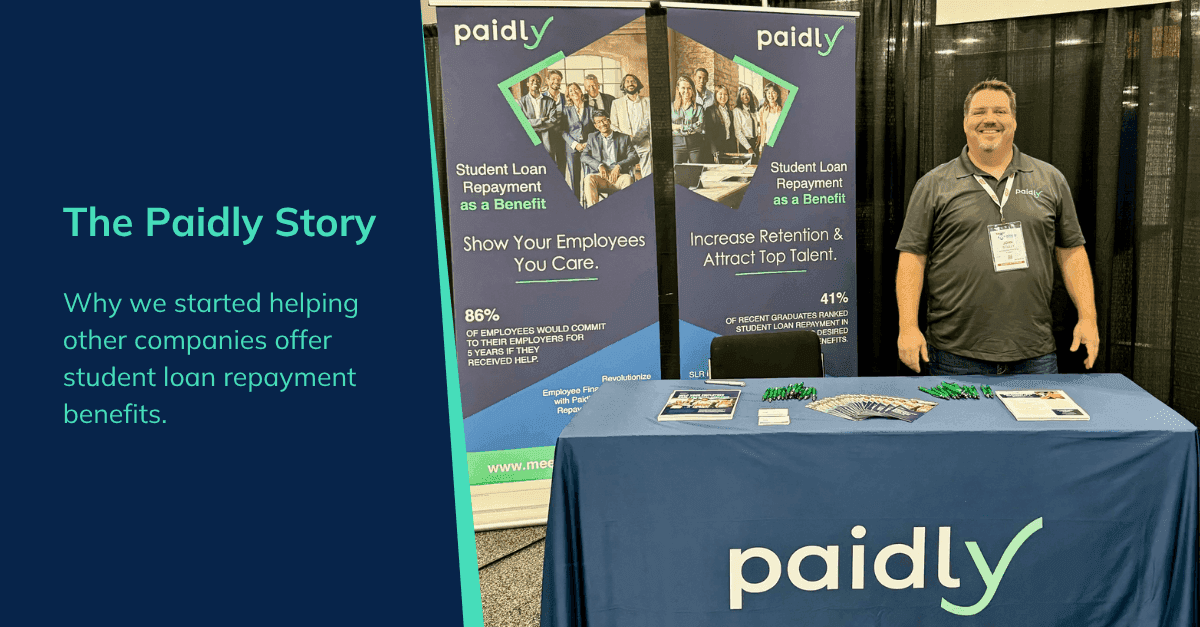
Why I Started Paidly
We set out to stop student debt from making life decisions for employees.


The HR Guide to Using Your Entire Education Budget
Your education budget can do a lot more than just pay for tuition. Learn how adding student loan repayment can expand your benefits without expanding your budget.
Education Benefits You Should Know About
Education benefits like 529 savings, tuition reimbursement, and student loan repayment can help you reduce education costs during every stage of your career.