
How to Reach Your Financial New Year’s Resolutions
6 tips you can use to achieve your financial goals in 2026.


Key Takeaways
- The beginning of a new year is the perfect time to set financial goals. Financial health is just as important as physical health for long-term wellness.
- Two common goals are to pay down debts and build up savings. Getting debts under control means you have more choices when it comes to your money, and putting funds aside helps with peace of mind for the future.
- Small steps can make a huge difference. Setting a budget, using autopay, and refinancing can get you on the right track.
- You don’t have to do it alone. Employer benefits and community crowdfunding help you get the support you need to achieve personal financial goals.
The new year brings a fresh wave of motivation to live a better, healthier, and happier life. Many New Year’s resolutions focus on physical health like getting fitter or eating better, but it’s important not to forget about financial health.
Now’s the perfect time to harness the start-of-the-year energy to improve your finances. Let’s get into common financial New Year’s resolutions and practical steps you can take to achieve them.
Financial New Year’s Resolutions
Beyond increasing income, most financial goals fall into two main categories: paying down debt and building up savings.
Paying down debt
Taking on debt is common and often unavoidable, but taking care of it is a must. Though owing money is never fun, paying it down faster means you’ll spend less on interest over time, freeing up some room in your budget.
Common debts to prioritize:
-
Credit card debt. With daily purchases adding up quickly, it doesn’t take long for credit card balances to spiral out of control. The average monthly credit card payment is $181 – manageable on its own, but easy to lose track of.
-
Car loans. The average car payment ranges from $565 to $754 depending on whether it's a used or new car. If you rely on a vehicle, this expense is necessary, so getting ahead of it frees up money for gas, maintenance, and unexpected repairs.
-
Student loans. Earning a degree is a major achievement, but it usually comes with long-term debt. The average student loan payment is $536 per month, and many borrowers spend 20 years paying it off.
-
Mortgage. The median mortgage payment is $1,521 ($2,225 for homes purchased in 2024). When housing is the largest monthly expense, staying on top of payments is essential.
Someone carrying the average amount of all these debts could be paying $2,992 each month just toward loans – add groceries, utilities, childcare, and transportation onto that, and you’re looking at a hefty monthly commitment.
Having a lot of debt can also make it harder to achieve the second major goal: building up savings.
Building up savings
None of us know what the future holds, but saving prepares you for both the expected and the unexpected. With money set aside, financial stress doesn’t have to define life’s curveballs.
Savings goals to consider:
-
Emergency funds. An emergency fund helps you feel prepared when life throws surprises your way. A common guideline is to save six months’ worth of living expenses. Use this Emergency Fund Calculator to see how much you should have stashed away.
-
Education savings. Whether for yourself or a loved one, education savings can make future goals more attainable. Children with education savings are six times more likely to attend college, and with average annual cost around $38,270, every dollar saved helps reduce future debt.
-
Retirement. Enjoying your later years takes planning. While recommendations vary, starting early with small contributions can make a significant difference over time. There are many different recommendations on how much to save – check out this Retirement Calculator to estimate the amount you’ll need.
Building up savings isn’t always easy, but the peace of mind it provides is well worth the effort. After all, when you save, you’re investing in your future and the well-being of those you care about.
6 Tips to Achieve Your Financial Goals
Making progress comes down to one key question: how can you put more toward your savings and loans? While it may feel overwhelming, there are many manageable ways to make progress.

1. Set a budget and trim expenses
Spending is easy but tracking it takes intention. A budget helps ensure your money goes toward essentials, long-term goals, and (ideally) a little fun. Cutting back might mean canceling unused subscriptions or eating out less, but small adjustments can free up a surprising amount of money. The 50-30-20 Rule can be a good place to start.
2. Pay extra when you can
When you have extra money from bonuses, tax refunds, or holidays, put it toward your savings or loans. Using those funds to get ahead means you don't have to stretch your budget. Plus, extra payments today can save you significant interest – or result in even higher dividends – tomorrow. Use this Extra Payment Calculator to see how much interest you could save.
3. Use autopay to stay consistent
Missing payments quickly sets you back. Setting up autopay can help keep you on track and you can even schedule payments above the minimum. Just be sure to check in regularly as autopay has some pitfalls – any issues that arise should be identified and dealt with ASAP.
4. Refinance for better terms
Interest adds up fast. Refinancing loans or finding higher-yield savings options can help you make faster progress without increasing your monthly contributions. Make sure to shop the rates, especially if you have student loan or mortgage payments.
5. Take advantage of employer benefits
Many employers offer financial benefits beyond a paycheck. While 401(k) matching is common, some companies now provide student loan assistance or 529 education savings contributions. Check with your HR department to ensure you’re maximizing what’s available to you.
6. Crowdfund for extra assistance
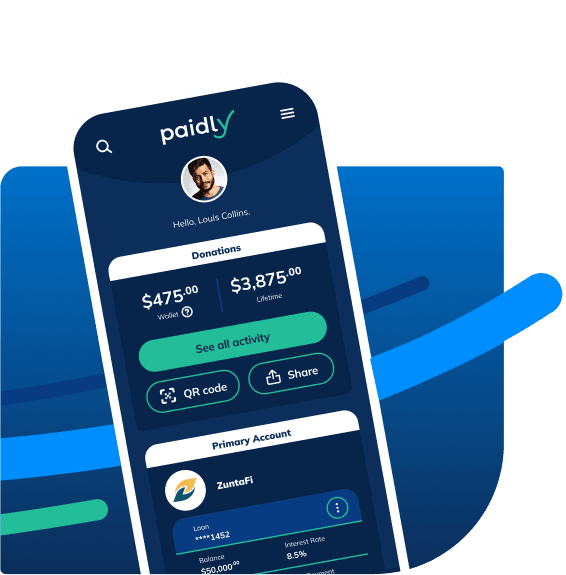
Financial goals don’t have to be achieved alone. Sharing your goals with friends and family, and inviting their support, can accelerate progress. Platforms like Paidly make it possible to crowdfund student loans and 529 savings directly to your account.

All yours in just a few taps
Gain financial awareness and take control of your debt, savings, and donations. Paidly is a convenient, connected way to get ahead with no pay-to-download or hidden fees.


Many Small Steps Lead to Big Leaps
Financial New Year’s resolutions can feel daunting, but small, consistent steps really add up. Revisit your goals often, celebrate progress along the way, and stay committed – you’ll be on your way in no time.
Here’s to a financially healthier year!

Samantha Park
Samantha Park is a writer with a background in public service work. She earned a M.S. in Professional Writing from Towson University where she focused on writing for the private and public sectors, and has previously graduated with an A.A. in Psychology from Anne Arundel Community College and a B.A. in Sociology from the University of Maryland College Park. Samantha has worked within and alongside the public sector for over a decade and cares deeply about empowering marginalized youth, expanding access to opportunity through education, and increasing community involvement.
Stay Ahead of the Curve
Get the latest insights on student loan repayment, 529 contributions, and maximizing employer benefits delivered to your inbox.
The information provided is of a general nature and an educational resource. It is not intended to provide advice or address the situation of any particular individual or entity. Any recipient shall be responsible for the use to which it puts this document. Paidly shall have no liability for the information provided. While care has been taken to produce this document, Paidly does not warrant, represent or guarantee the completeness, accuracy, adequacy, or fitness with respect to the information contained in this document. The information provided does not reflect new circumstances, or additional regulatory and legal changes. The issues addressed may have legal, financial, and health implications, and we recommend you speak to your legal, financial, and health advisors before acting on any of the information provided.
You may also like

Preparing for the Talent Storm: Student Loan Benefits for Recruitment & Retention
As skilled worker shortages loom, student loan repayment benefits give employers a practical way to attract early-career talent and retain valuable employees.

Why I Started Paidly
We set out to stop student debt from making life decisions for employees.


The HR Guide to Using Your Entire Education Budget
Your education budget can do a lot more than just pay for tuition. Learn how adding student loan repayment can expand your benefits without expanding your budget.