
How to Minimize Student Loans While in College
The ultimate price of a bachelor’s degree is over $500k. Here’s how you can minimize the cost and set yourself up for a bright financial future along the way.


Key Takeaways
- Your degree comes with a massive price tag. Luckily, there are many ways to help offset the cost.
- Seek aid that doesn’t have to be repaid. Apply for FAFSA, grants, scholarships, and crowdfunding to minimize the amount of loans you have to take out.
- The average university course costs over $1,200. Lower course costs by enrolling at a community college, taking CLEP exams, and earning credit for paid internships.
- Work while studying to gain experience and put wages toward your expenses. Seek FWS opportunities, assistantships, and other part-time jobs.
College is Expensive
The cost of college is no joke. If you’re in college (or about to go to college) you already know how expensive it can be. What you might not realize is that the ultimate price of a bachelor's degree is likely over $500k when accounting for the cost of living, study materials, tuition, institution fees, student loan interest, and lost wages.
$500k – that’s a lot of money.
With rising college costs, it’s important to find ways to lower the out-of-pocket expense of earning your degree. Let’s get into how you can minimize your educational price tag now so you have less student debt to pay back later.
1. Seek Aid
The best way to minimize student loan debt? Don’t take out so much in the first place.
There are a lot of ways you can do this, but some of the most effective (and impactful) are to seek aid that you don’t have to pay back.

Fill out FAFSA
The Free Application for Federal Student Aid (FAFSA) determines how much federal aid you can receive based on your circumstances. Filling it out is the only way you can qualify for the Pell grant, Federal Work Study, and other federal grants and scholarships.
FAFSA opens on October 1st each year. Make sure you submit your application as early as possible – aid is often on a first-come, first-served basis.
See how much aid you may be eligible for with the Federal Student Aid Estimator.
Apply to grants and scholarships
Grants and scholarships provide money for education that you don't have to pay back. They typically require an application process and are awarded based on financial need or merit (think grade-point average, volunteerism, demonstrated leadership, etc.). Application processes vary and can be intensive, so make sure to do your research and keep track of deadlines if you plan to apply.
You can find grants and scholarships with the Department of Labor’s Scholarship Finder.
Crowdfund your student loans
College is a financially straining time – don’t be afraid to ask for help. One of the simplest ways you can lower college costs is to crowdfund your student loans.
Crowdfunding allows family, friends, and other people in your support system to help fund your education directly. When people ask what you want for your birthday, holidays, or other times of celebration, tell them to make a contribution toward your student loans.
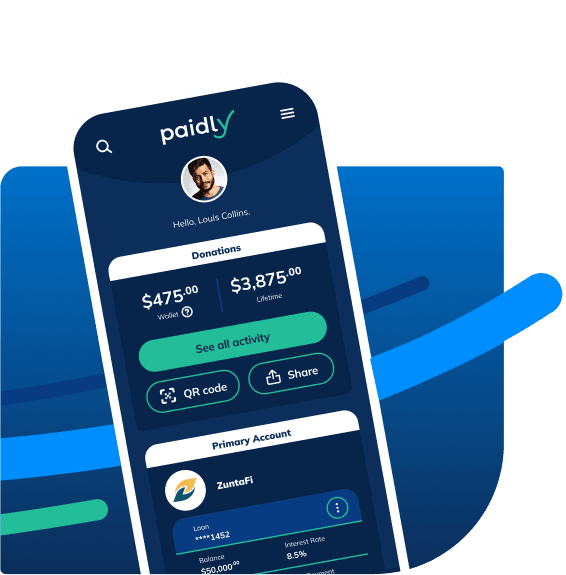
Paidly makes crowdfunding with your community simple and gives you a way to receive employer contributions to your loans once you start your dream job. Check it out to see if crowdfunding is right for you.

All yours in just a few taps
Gain financial awareness and take control of your debt, savings, and donations. Paidly is a convenient, connected way to get ahead with no pay-to-download or hidden fees.


2. Lower Course Costs
Another way to save on college is to decrease the amount you pay for classes. The average three-credit course at a university is over $1,200 (yikes!). Luckily, there are easy ways you can get course credit for a much discounted price.
Enroll in community college courses
Going to community college was the number one piece of advice student borrowers told us, and for good reason!
On average, community college courses cost around $450 – just a fraction of university prices. By completing your general education credits (like required math, English, and health courses) at a community college, you can save up for the university prices of your upper-level requirements.
Many universities transfer credits from community colleges, making them a great option during summers and minimesters. Plus, community colleges cater to a wide range of students and often offer online synchronous and asynchronous options, making it easy for you to get your credits in and still enjoy your breaks.
Take CLEP exams
Why pay to be taught things you already know? By taking knowledge-based exams through the College-Level Examination Program (CLEP), you may be able to get college credit for knowledge you gained through work experience, personal interests, hobbies, or even self-study.
CLEP exams cost $97 each – over a thousand dollars cheaper than taking the course at your university. You can check out the list of available exams on CLEP’s website.
Get credit for a paid internship
Whether or not your program requires an internship, they’re a great way to get work experience in your field and make a little money.
Landing a paid internship and using that experience for course credit means you can offset the cost of the course by putting wages toward tuition or your loans. Plus, you’ll be building your resume while getting your credits in – a win all the way around.
3. Work While in College
Though it may seem stressful, getting work experience while going to school is invaluable to your job prospects after graduation. By taking on part-time work, you’ll get experience that’ll help you post-graduation while offsetting the cost of college.

Find FWS opportunities
Federal Work Study (FWS) is a program that reserves jobs specifically for students receiving federal aid. Often, these jobs let you work for your university or a nonprofit or government agency and guarantee you’ll make at least minimum wage for a set number of hours a semester.
The best part? Wages from FWS can be paid to you or be put directly toward paying off education expenses like tuition, if requested. Plus, you’re not competing with all students for these positions since they’re only available to other students with FWS allotments.
Opportunities are out there – talk to your university’s financial aid office to see what’s available to you.
Seek out assistantships
You may have heard of Research Assistantships (RA), Resident Assistantships (RA), or Teaching Assistantships (TA), but what are they?
Unlike FWS, assistantships usually waive part of your tuition on top of paying a wage. These positions are usually more intensive than FWS opportunities and often have steeper requirements (like prior work experience or having reached a certain level of study in your field).
Assistantships are common at the graduate level, but there are undergraduate assistantships, too. They’re worth looking into – on top of waiving tuition and paying you directly, they sometimes include a housing stipend or give you free on-campus housing.
Get a part-time job or internship
If FWS and assistantships aren’t available to you, seek out other paid work. You can put these experiences on your resume and put wages toward your loans or college expenses. Starting repayment early can make a huge difference to how much you’ll pay in the long run.
Save in Small Ways Now to Save Big Later
Any one of these methods – seeking aid, saving on courses, and gaining paid experience – may not seem effective on their own, but a little goes a long way when it comes to lowering the price tag on your degree. Put money from gifts, savings, and wages toward your college costs and you’ll be on the path for a bright financial future.

- Want more cost-savings tips? Read the advice college graduates have for future borrowers.
- Want to see how much college could cost you? Use the Consumer Financial Protection Bureau’s financial path to graduation calculator.

Samantha Park
Samantha Park is a writer with a background in public service work. She earned a M.S. in Professional Writing from Towson University where she focused on writing for the private and public sectors, and has previously graduated with an A.A. in Psychology from Anne Arundel Community College and a B.A. in Sociology from the University of Maryland College Park. Samantha has worked within and alongside the public sector for over a decade and cares deeply about empowering marginalized youth, expanding access to opportunity through education, and increasing community involvement.
Stay Ahead of the Curve
Get the latest insights on student loan repayment, 529 contributions, and maximizing employer benefits delivered to your inbox.
The information provided is of a general nature and an educational resource. It is not intended to provide advice or address the situation of any particular individual or entity. Any recipient shall be responsible for the use to which it puts this document. Paidly shall have no liability for the information provided. While care has been taken to produce this document, Paidly does not warrant, represent or guarantee the completeness, accuracy, adequacy, or fitness with respect to the information contained in this document. The information provided does not reflect new circumstances, or additional regulatory and legal changes. The issues addressed may have legal, financial, and health implications, and we recommend you speak to your legal, financial, and health advisors before acting on any of the information provided.
You may also like

Preparing for the Talent Storm: Student Loan Benefits for Recruitment & Retention
As skilled worker shortages loom, student loan repayment benefits give employers a practical way to attract early-career talent and retain valuable employees.

Why I Started Paidly
We set out to stop student debt from making life decisions for employees.


The HR Guide to Using Your Entire Education Budget
Your education budget can do a lot more than just pay for tuition. Learn how adding student loan repayment can expand your benefits without expanding your budget.